
Views: 5 Author: Site Editor Publish Time: 2026-06-25 Origin: Site
Moving water reliably—up from a borehole or out of a flooded basement—comes down to choosing the right pump. Two of the most common workhorses in this space are the sewage pump and the deep well pump. Each solves a very different problem, yet buyers often confuse the two when sourcing equipment for farms, homes, and industrial sites.
This guide breaks down how both pump types work, where they shine, and what to look for when comparing them. It also explains why China deep well pumps have become a popular choice for global buyers who want quality and value in one package. By the end, you'll know exactly which pump fits your project and how to source it with confidence.
MASTRA PUMP, a brand of Guangdong Ruirong Pump Industry Co., Ltd., has spent more than 30 years building water solutions for over 80 countries. The insights below draw on that experience.
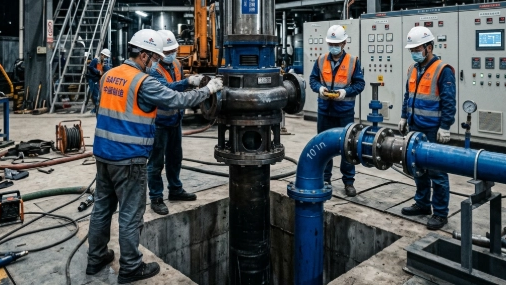
A sewage pump moves wastewater and solid waste from a low point to a sewer line or septic system. You'll find these pumps in basements, lift stations, and any place where gravity alone can't carry waste away. Unlike clean-water pumps, a sewage pump is engineered to pass solids without clogging.
The core strength of a sewage pump lies in its design. Wide impeller channels and durable casings let it handle solids that would jam an ordinary pump. Stainless steel models, like the MDB550 Stainless Steel Submersible Sewage Pump, resist corrosion and last longer in harsh conditions.
Common uses for sewage pumps include:
Residential basements where bathrooms sit below the main sewer line
Municipal lift stations that move waste across long distances
Commercial buildings with high-volume wastewater needs
Farms and processing plants dealing with slurry and organic waste
When choosing a sewage pump, pay attention to solid-handling capacity, flow rate, and the head (vertical lift) it can manage. A pump that's too weak will struggle and wear out fast.
A deep well pump pulls water from wells and boreholes that can run hundreds of feet underground. Most modern versions are submersible, meaning the entire unit sits below the water line. This design pushes water up the pipe rather than pulling it from above, which makes it far more efficient for deep applications.
Deep well pumps serve a clear purpose: steady access to groundwater. Rural homes, irrigation systems, and livestock operations all depend on them. A full stainless steel deep well pump resists rust and handles sandy or mineral-heavy water better than cheaper materials.
Key features that define a strong deep well pump:
Multistage impellers that build the pressure needed to lift water high
Stainless steel construction for long service life
Sealed motors rated for continuous underwater operation
Compatibility with solar systems, such as the MASTRA Full Stainless Steel Deep Well Pumps Solar DC Water Pump System
Solar-powered options deserve a special mention. They let users draw water in remote areas with no grid connection, cutting running costs to almost nothing once installed. For farmers and off-grid communities, that reliability matters.
The two pump types overlap in name but not in function. The table below lays out the main differences at a glance.
Feature | Sewage Pump | Deep Well Pump |
|---|---|---|
Main job | Move wastewater and solids | Lift clean water from boreholes |
Typical placement | Pits, basements, lift stations | Deep wells, often 100+ feet down |
Handles solids? | Yes, designed for it | No, built for clean water |
Common design | Single-stage, wide impeller | Multistage, narrow body |
Best for | Drainage and waste removal | Irrigation, drinking water, livestock |
Solar options | Limited | Widely available |
Picking between them is simple once you know the source and destination of the water. Choose a sewage pump if your priority is removing dirty water and solids without clogging. Choose a deep well pump if you need to draw clean water from far below ground, especially where pressure and lift are the main challenges.
China has become the global hub for pump manufacturing, and a China deep well pump now competes with—and often beats—pricier alternatives on both quality and cost. Decades of refined production have closed the quality gap that once worried overseas buyers.
Several factors explain this shift. Chinese manufacturers like Guangdong Ruirong Pump Industry hold ISO 9001:2015 certification, run automated production lines, and ship to more than 80 countries. That scale keeps prices low while maintaining tight quality control.
For buyers, a China deep well pump offers clear advantages:
Lower unit cost without a drop in build quality
Stainless steel construction as a standard, not a premium add-on
Solar-ready models for off-grid and eco-conscious projects
Direct factory sourcing that cuts out middleman markups
Sourcing from an established maker reduces risk. A factory with 30 years of R&D experience can support custom specs, handle bulk orders, and back products with real warranties. That combination is why so many distributors and contractors now turn to China deep well pump suppliers first.
The right pump depends entirely on the job in front of you. A sewage pump keeps waste moving and protects buildings from backups, while a deep well pump delivers clean groundwater for homes, crops, and livestock. China deep well pumps bring strong build quality and fair pricing to the table, which is why buyers across 80-plus countries rely on them. To recap: match the pump to your water source and destination, prioritize stainless steel construction for longevity, and source from a certified manufacturer with a proven track record—like MASTRA PUMP at www.solarpumpsupplier.com—to get equipment that performs for years.


